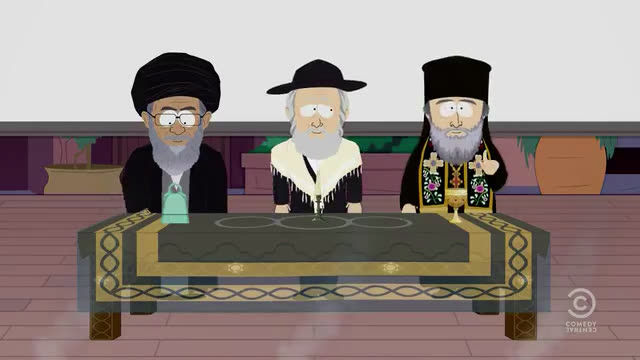
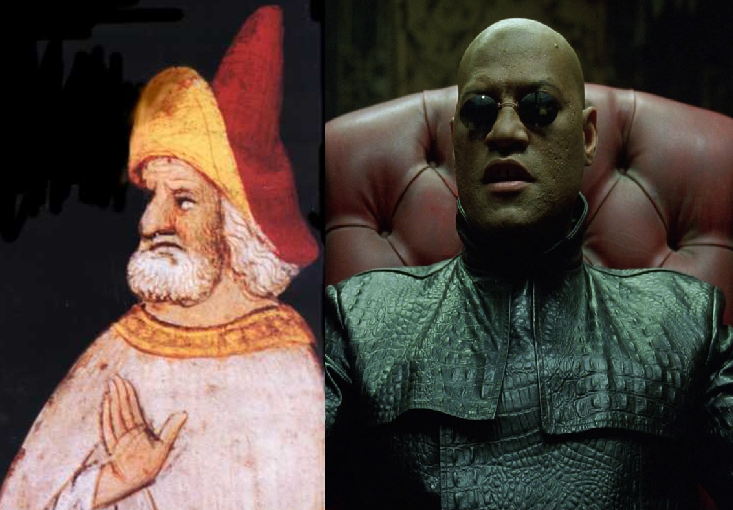
What do Israel, Pakistan, and South Park have in common? Each has transformed a monotheistic religion into an ethnonationalist political identity that has little to do with that religion beyond its name. In this blog post, I will explore these three cases, pointing out the similarities (and few differences) between them. In the last section, I will discuss two possible counter responses to religion as ethnonationalism: one that I call the “Randy-ChatGPT principle” and another one that I would have called the “Jesus response” (I will explain later why I have crossed it out!).
Category Archives: Film and Literature
Oriental(ist) Metal Music
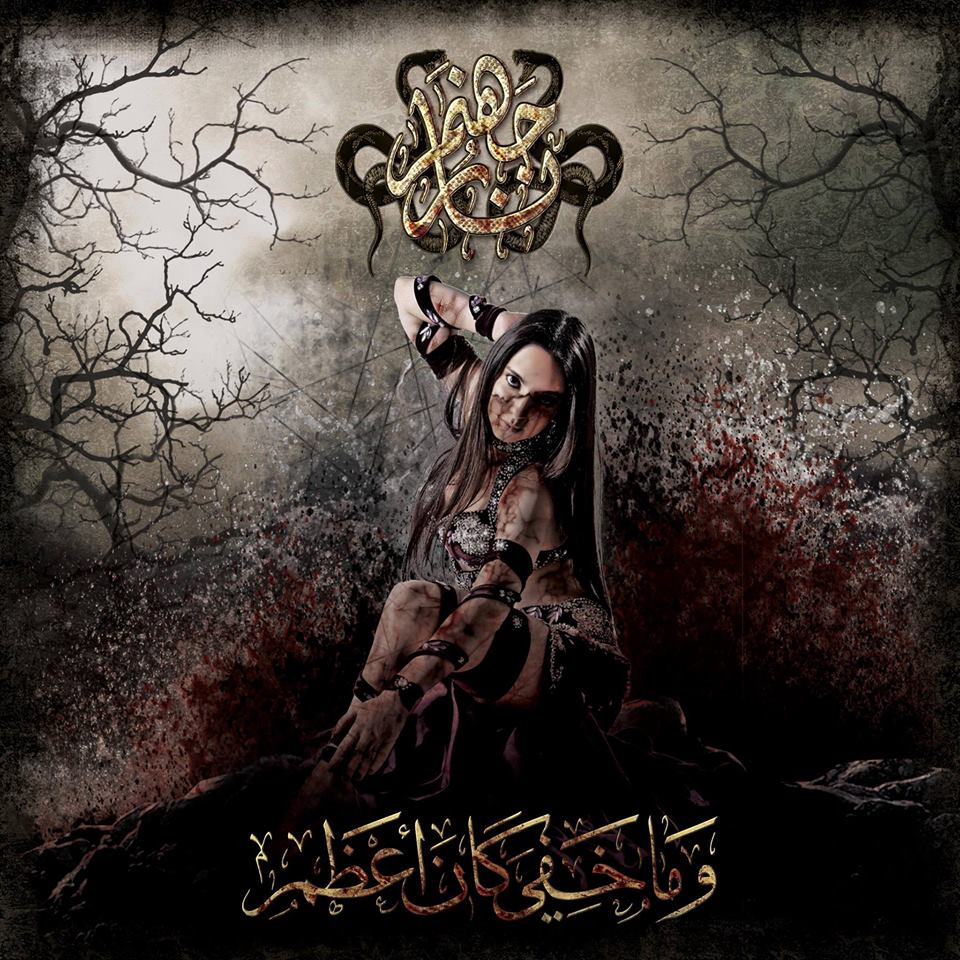
Cover for the most recent album Wa Ma Khufiya Kana A’atham (2013) by Bahrainian oriental metal band Narjahanam
Metal music has gone global. It is a fact that is recognized by most fans and followers of this genre of popular music. Many documentary films, academic books, and media features have documented excitedly the globalization of metal music tracing it to the farthest corners of the globe.
One of the regions in which metal music has thrived in the past decade is the Middle East. Following the explosion of folk metal—a variety of metal music in which folk tunes, instruments, and themes are fused with conventional metal music—in European metal scenes some 15 years ago, many Middle Eastern bands have attempted to create their own version of folk metal. The term “oriental metal” has hence entered metal nomenclature to refer to bands that incorporate “oriental” sounds with metal music.
Vladimir Bartol’s Alamut and the Matrix
Note: There might be few spoilers in this post!
Last week I finally finished reading Valdimir Bartol’s and Slovenia’s most well-known literary work: the novel of Alamut. As I mentioned in my previous post, the novel is based on the historical legend of the Assassins: the radical Muslim sect that terrorized in the 12th and 13th centuries the Crusaders and local Muslims rulers in Iran and Syria with their assassinating daggers. According to the legend, Hasan al-Sabbah—the sect’s founder, ideologue, and military commander—used hashish to trick his would-be assassins to believe that he held the keys to Paradise, which transformed them into blind followers willing to embrace death instantly and unconditionally. The novel, however, is not limited to themes of murder, sexual lust, and religious manipulation. It is also an intellectual work that delves deeply into human beings’ conflicting quests for faith and doubt; for meaning and knowledge; for power and morality. Bartol draws on his knowledge of various currents of thought ranging from the philosophies of ancient Greece, through Nietzsche and Freud, to totalitarianism.
The Assassins’ Creed: “Nothing is True – Everything is Permitted”

An artist’s impression of Alamut for the movie “Prince of Persia, Sands of time” (credit: François Baranger)
When I started this blog, I didn’t mean to write exclusively about God, Nietzsche and the relationship between religion and reason. However, somehow this topic is coming again and again to me even when I don’t mean to approach it. Currently I’m reading the most popular work of modern Slovenian literature (according to Wikipedia): Vladimir Bartol’s novel Alamut. The novel is based on the orientalist legend of the Assassins; a radical Muslim sect that terrorized with their assassinations the Crusaders and local Muslim rulers in many parts of the Middle East throughout the 12th and 13th centuries.
The Assassins is the name given by Crusaders and some European travelers to the Nizari Ismaili sect, whose followers controlled a network of strongly fortified citadels and fortresses in Syria and Iran. They did not have an army in the proper sense of the word due to their small numbers and dispersion, but they trained special units of assassins, who could assassinate any king, prince, or military commander that dared to attack them or challenge their power. You may now intuitively think it’s no wonder they acquired the name Assassins; it is simply because they assassinated many people. The truth, however, is the other way around: The word assassinate in English and its etymological equivalents in other European languages are actually derived from their name, which is in turn derived from the Arabic word hashashin (“hashish users”). Their Muslim neighbors probably used the name only abusively meaning something like “bandits” or “pariahs” without accusing them seriously of adopting the practice of taking hashish. However, with the orientalist fantasies of European travelers the term became the source of an infamous legend of sexual lust, religious murder, and deception.